What-Is-Rip-Rap-Choosing-the-Right-Rock-for-Your-Project
Water can gradually wash away soil, deepen drainage channels, and damage exposed slopes. Rip rap helps protect these areas by creating a durable layer of stone between moving water and the ground beneath it. It also brings a rugged, natural appearance to landscape projects.
But which rip rap should you use? A small landscape drainage area and a heavily exposed shoreline have very different requirements. Understanding how rip rap works—and how the available grades differ—is a useful starting point.
What Is Rip Rap Used For?
Rip rap is rock placed over soil to help protect against erosion caused by flowing water or waves. Its weight helps it stay in position, while the spaces between the stones allow water to move through the protective layer. Crushed, angular stone also fits together to create a stable surface.
Common applications include:
Drainage ditches and channels: Protecting exposed soil along a designed water route.
Culvert and stormwater outlets: Helping protect areas where concentrated water leaves a pipe.
Pond banks and shorelines: Providing protection where water movement can wear away the bank.
Slopes and embankments: Covering areas exposed to runoff.
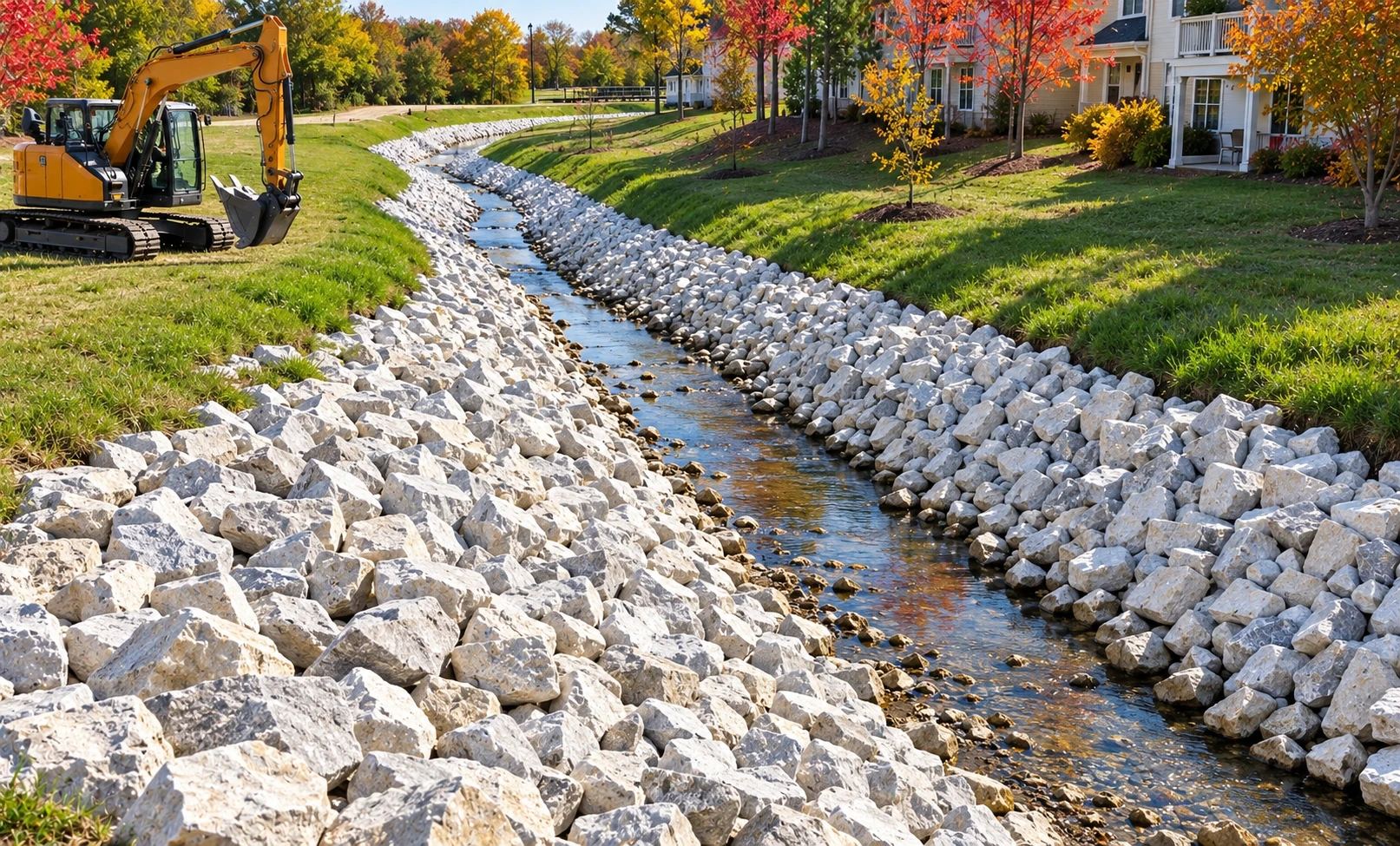
Landscape features: Creating dry creek beds, rock accents, and transitions around larger stones.
For erosion control, the stone needs to match the water conditions. For decorative projects, appearance, scale, and placement may be the main considerations.
Why Rip Rap Size Matters
Choosing rip rap involves more than picking a rock that looks large enough. Water velocity, water depth, wave exposure, slope, and underlying soil all influence the design. Stone that is too small can move, leaving the ground exposed. Larger stone may provide more resistance, but it also requires suitable preparation, layer thickness, and placement.
Rip rap grades describe a range of stone sizes rather than identical pieces. A properly graded mix helps the stones work together as a protective layer. Also, the number in a product name is a grade designation—not a measurement in inches. RR5 does not mean five-inch rock.
At AZ Hard Rock Inc., our rip rap lineup includes RR1, RR3, RR4, and RR5. Here is how to think about those options when planning a project.
RR1: A Smaller Option for Landscape and Light-Duty Applications
RR1 offers a smaller rock appearance than the larger rip rap grades. It can be a starting point for decorative drainage features, landscape accents, and projects where a smaller stone profile fits the space.
For example, a dry creek bed in a landscape may benefit from smaller rock that follows the shape of the bed without overwhelming nearby plants or edging.
If that feature also carries concentrated stormwater, the drainage conditions should determine whether RR1 is suitable. A small-looking channel can still carry powerful runoff during a heavy storm.
RR3: A Step Up for Drainage and Erosion-Control Projects
RR3 provides a larger stone profile and may be considered for drainage channels, outlet protection, and slope protection where the project design calls for this grade.
It can also suit larger decorative creek beds or landscape areas where smaller stone would look out of proportion.
For a culvert outlet, avoid choosing the grade based only on the pipe diameter. The amount and speed of water leaving the pipe, the soil below it, and the dimensions of the protected area all matter. Follow the outlet detail or drainage design when one is available.
RR4: Larger Stone for More Substantial Protection
RR4 is a larger option to discuss for bank protection, larger drainage features, and embankment projects requiring heavier stone.
It may also be considered for pond edges or other exposed areas when the design specifies that grade. A sheltered pond edge and a shoreline exposed to repeated waves can require different protection, even if they look similar on a calm day.
Plan for equipment access when using larger rip rap. Getting the stone to the site is only part of the job; it also needs to be placed at the required depth and coverage.
RR5: Heavy Stone for Demanding Applications
RR5 is the largest grade in this lineup. It is an option for substantial erosion-control work where the plans require larger, heavier rock.
Potential applications include exposed banks, larger stormwater structures, and other locations subject to significant water forces. These projects should use a specified rip rap grade and installation detail rather than an estimate based on appearance.
For decorative work, RR5 creates a bold visual effect. Consider the scale of the surrounding landscape and how the stones will be handled before ordering.
Proper Installation Matters as Much as the Rock
Even correctly selected rip rap can perform poorly if water washes soil out from beneath it or works around its edges.
Depending on the design, installation may require a prepared slope, a suitable granular filter or geotextile, a specified stone thickness, and secured edges or toe protection. The filter layer helps retain the underlying soil while allowing water to pass through. Ordinary landscape weed fabric should not automatically be substituted for a specified erosion-control geotextile.
Find Rip Rap for Your Next Project
Before ordering, gather your project dimensions, photos, access information, and any plans or material specifications. For engineered work, bring the exact grade and quality requirements so the material can be checked against the job.
Whether you are planning a landscape feature or sourcing stone for an erosion-control project, AZ Hard Rock Inc. can discuss our available rip rap products and help you prepare your order.